All Categories

Fire & Safety

Electrical

HVAC

Sustainable

Construction

Security System

Plumbing & Sanitary

Lab Equipments

Hardware & Tools
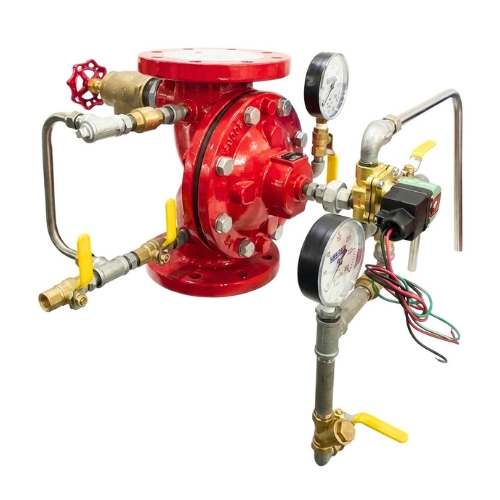
Product Type: Alarm Check Valve
Brand: Any
Origin: China
System: Deluge Fire Suppression
Normal Condition: Water Held Upstream
Discharge Devices: Open Sprinklers / Nozzles
Actuation: Wet / Dry / Electric Options
Alarm: Hydraulic / Electrical
Connections: Flanged / Grooved /
Certification: UL / FM Options
From sound to comfort — Aurora Pro is designed with all-day use in mind.
Block out unwanted noise and focus only on your music.
Enjoy up to 40 hours of continuous use on a single charge, with 5 hours of playback from just a 10-minute charge.
Fast and stable connection, supporting up to a 30-meter range.
Memory-foam ear cushions and a lightweight frame ensure zero pressure even after long hours of use.
The Fire Fighting Deluge Alarm Valve is a specialized automatic water-control valve used in deluge fire protection systems for high-hazard areas where rapid, large-volume water discharge is required. Unlike a conventional sprinkler system, a deluge system uses open sprinklers or nozzles, while the deluge valve normally prevents water from entering the distribution pipework until the system is actuated.
When the associated detection or release system operates, the valve opens and allows water to flow throughout the connected piping network simultaneously. The resulting water flow can activate hydraulic and electrical alarm devices to provide fire notification. Modern deluge valve systems are available with wet, dry or electric actuation arrangements and UL/FM-approved configurations.
Product Type: Alarm Check Valve
Brand: Any
Origin: China
System: Deluge Fire Suppression
Normal Condition: Water Held Upstream
Discharge Devices: Open Sprinklers / Nozzles
Actuation: Wet / Dry / Electric Options
Alarm: Hydraulic / Electrical
Connections: Flanged / Grooved / Model-Specific
Pressure: Model-Specific
Size: Manufacturer-Specific
Fire Hydrant Type: Ordinary
Certification: UL / FM Options
Application: Special-Hazard Fire Protection

Rapid Area-Wide Water Discharge
The major benefit of a Deluge Alarm Valve is its ability to release water into the connected distribution network when the release mechanism operates. Because deluge systems generally use open discharge devices, water can reach multiple outlets across the protected area simultaneously.
Protection for High-Hazard Areas
A Fire Fighting Deluge Alarm Valve is well suited to applications where fire can spread rapidly and localized sprinkler activation may not provide the required response strategy.
Automatic Alarm Initiation
Once the deluge valve operates and water begins flowing, connected alarm equipment can provide local and/or remote notification. Deluge valve systems can incorporate water-flow and supervisory switches as part of the overall fire protection package.
Flexible Release Methods
Depending on system design, the valve can be actuated through hydraulic, pneumatic or electrical release arrangements. This allows engineers to select an activation method appropriate for the protected hazard.
Emergency Manual Operation
A compatible manual release station can provide a means of manually actuating the automatic water-control valve during an emergency. Tyco's MC-1, for example, is designed as a manual release component for deluge and preauction systems.

Several actuation arrangements are used in deluge fire protection systems. The main types of deluge valve system arrangements include:
Wet Pilot Deluge System
Uses a hydraulically operated wet pilot line and associated detection arrangement.
Dry Pilot Deluge System
Uses pneumatic supervision and a dry pilot release arrangement. Suitable configurations can incorporate a pneumatic actuator and associated release components.
Electric Release Deluge System
Uses an electrically controlled release arrangement, typically involving a listed solenoid and fire detection/control system.
Manual Release Arrangement
Provides a manual means of emergency actuation through an approved manual control station.
The exact system type should be determined by the hazard, detection strategy, environmental conditions and approved fire protection design.
Correct deluge valve installation is essential because the valve, trim and detection/release equipment must operate together as a coordinated system.
Key installation considerations include:
The manufacturer’s installation manual should be followed for the particular valve and trim package. Victaulic, for example, publishes dedicated installation, maintenance and testing manuals for its Fire Lock NXT deluge valves.

The Fire Fighting Deluge Alarm Valve is a powerful solution for special-hazard areas where rapid and coordinated water discharge is required.
Its ability to hold water back until the release system operates, followed by rapid admission of water into an open-nozzle distribution network, makes it suitable for hazards requiring area-wide suppression.
Compatible alarm and supervisory devices can also integrate the valve into a broader fire detection and monitoring system.
For dependable performance, choose a valve that matches the project's hydraulic requirements, actuation method, alarm configuration, pressure rating, connection type and required UL/FM or other applicable approvals.
The Fire Fighting Deluge Alarm Valve is an essential control component for appropriately designed deluge fire suppression systems. It keeps the water supply isolated from the downstream open-nozzle network until the release system activates, after which water can be distributed rapidly throughout the protected zone.
For high-hazard fire safety projects, the correct valve should be selected according to hydraulic demand, pressure, valve size, actuation method, alarm trim, installation requirements and applicable certification. Deluge systems are specialized fire protection arrangements and should be designed, installed, tested and maintained by appropriately qualified professionals.
| Size | Any |
| Model | Any |
| Origin | USA or China |
| Warranty | As per policy |
From audits and engineering design to maintenance and complete project solutions, our experienced team is ready to support you.